

Supporting earlier diagnosis of lung cancer
What is a Targeted Lung Health Check?
- Targeted Lung Health Checks (TLHC) are being offered in our area to support with the early detection and treatment of lung cancer.
- Those between the ages of 55 and 74 who are current or former smokers will be invited to a TLHC.
- The check compromises of two stages, the first is a telephone call with a health professional who will assess your risk of lung cancer. If you are deemed to be high risk, you will be invited for a low dose chest CT. The TLHC service will organise this, as required.
- The TLHC Programme is currently being rolled out across England. Initially being available in areas of England with the highest lung cancer mortality rates but is expected to be available nationally by 2024-25
Further Information:
We have listed these Frequently Asked Questions on this page. You can also download them by clicking on the button below:
Why it's important
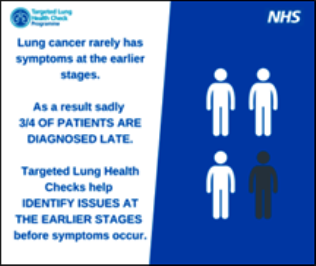
- Lung cancer often goes undetected during its early stages, due to there often being no signs of symptoms. Less than 20% of people diagnosed with lung cancer survive for 5 years or more.
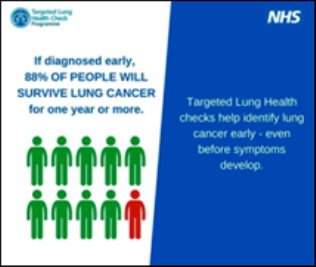
- TLHCs help detect cancer at an earlier stage, when curative treatment is more possible.
- To date, 80% of lung cancers found by the TLHC programme have been at stage 1 or stage 2, compared to 30% without this kind of intervention.
How can your practice support the programme:
We need your help to raise awareness of the programme and educate the public on the importance of detecting lung cancer early. TLHC uptake rates are currently low, with an average of 35% of people taking up their invitation for a lung health check. Data collected from the programme’s non-attendee survey shows the most common reason given for non-attendance is people ‘felt they did not need or see the benefit of a Lung Health Check / invited by mistake’.
Ways in which GPs can support the programme include:
- Opportunistic discussion with patients who are eligible for the TLHC programme, to help them make an informed decision about attending an appointment when invited.
- Please code the smoking status of patients if not already done as a correct smoking status is key for invitations to be sent out to eligible patients.
- Direct those eligible for a check to more information on the TLHC and hand out the participant booklet.
- By sending a text message to everyone on your list between 55 and 74 as they will receive an invitation,
suggested Text:
You will soon be receiving an invite for a free Lung Health Check. If you have ever smoked, please look out for your invite, and say YES. The Lung Health Check helps to find and treat lung disease earlier before you have any symptoms. Early diagnosis saves lives.
Ways in which the Practice Manager and Reception Team can support the programme include:
- Putting up posters and information leaflets in your practice to help raise awareness of the programme
- By being familiar with the FAQs document, so if members of the public ask questions they can be answered quickly and efficiently
Frequently Asked Questions:
General Questions:
Why are we offering lung health checks?
There are often no signs or symptoms of lung cancer at an early stage. As a result, sadly 7 out of 10 cancer patients are diagnosed too late to be cured. Target lung health checks can help diagnose lung cancer early, at a stage where treatment can be simpler and more successful.
What is a Targeted Lung Health Check (TLHC)?
A Targeted Lung Health Check is a two-stage process to help assess the health of the participants lungs. It begins with a telephone call or meeting where a specialist nurse will ask a series of questions to evaluate the participants chances of developing lung cancer. If they are identified as someone who is at an increased risk of developing lung cancer, they will be invited for a quick scan to produce a detailed image of your lungs.
Why have you been invited?
Patients aged 55 to 74 who have ever smoked will be invited to a Lung Health Check, providing their smoking status is correctly recorded in their GP record.
What happens at a TLHC?
Participants will be invited to an initial assessment which usually takes place over the phone.
#Patients will be contacted at the time of their appointment by a specialist health professional. The health professional will ask the patient a series of questions about their smoking history, lifestyle and current health and wellbeing. The health professional will complete two risk assessments based on the answers given by the patient. If the patient meets a certain risk threshold on either of the risk assessments, they will be offered a low dose CT scan.
The risks and benefits of the CT scan will be explained to the patient by the health professional.
Where are TLHCs being offered?
TLHCs are initially being offered in areas of England with the highest lung cancer mortality rates and we are now rolling expanding the checks across the country. See map, appendix 7 and 8.
Why does early diagnosis make a difference?
Data from the Targeted Lung Health Check Programme so far shows that with these potentially life-saving checks, lung cancer early diagnosis rates can be as high as 80% - compared to less than 30% without this type of intervention – enabling doctors to treat cases sooner, when curative treatment is more possible, saving more lives.
Will TLHC be rolled out as a national screening programme?
NHSEI’s aim and hope is that Lung Health Checks will be rolled out nationally. There are 23 sites currently live and 20 more launching in April 2022.
How many patients will be invited to TLHC
Across the 43 sites it’s expected up to 1.5m people will be invited for a check.
Lung Scan / CT Scan Questions:
Who can’t have a scan?
There are a number of reasons why a patient might not be offered a low dose CT scan and these include:
- They’re unable to lie flat
- They’re unable to transfer onto the CT scanning bed without support, or with the support of somebody who attends the scan with them
- They weigh more than 200kg/31.5 stones
- They are not physically fit.
- They do not have capacity to consent to the CT scan and it is not in their best interests to have one
Appointment Questions:
Can I bring someone to my appointment?
This will depend on your local service, please see their relevant contact details from your invitation and ask them directly.
Do I have to get undressed?
You may need to remove your coat, but you can leave your clothing on.
Is support available for patients with additional needs?
Call the number in the letter if you need additional support.
How will invitations be issued?
By post